Ripple (XRP) is trading under pressure, resting squarely on support at $2.00 at the time of writing on Friday. The path with the least resistance appears downward, weighed down by declining retail demand despite minor inflows into XRP spot Exchange Traded Funds (ETFs).
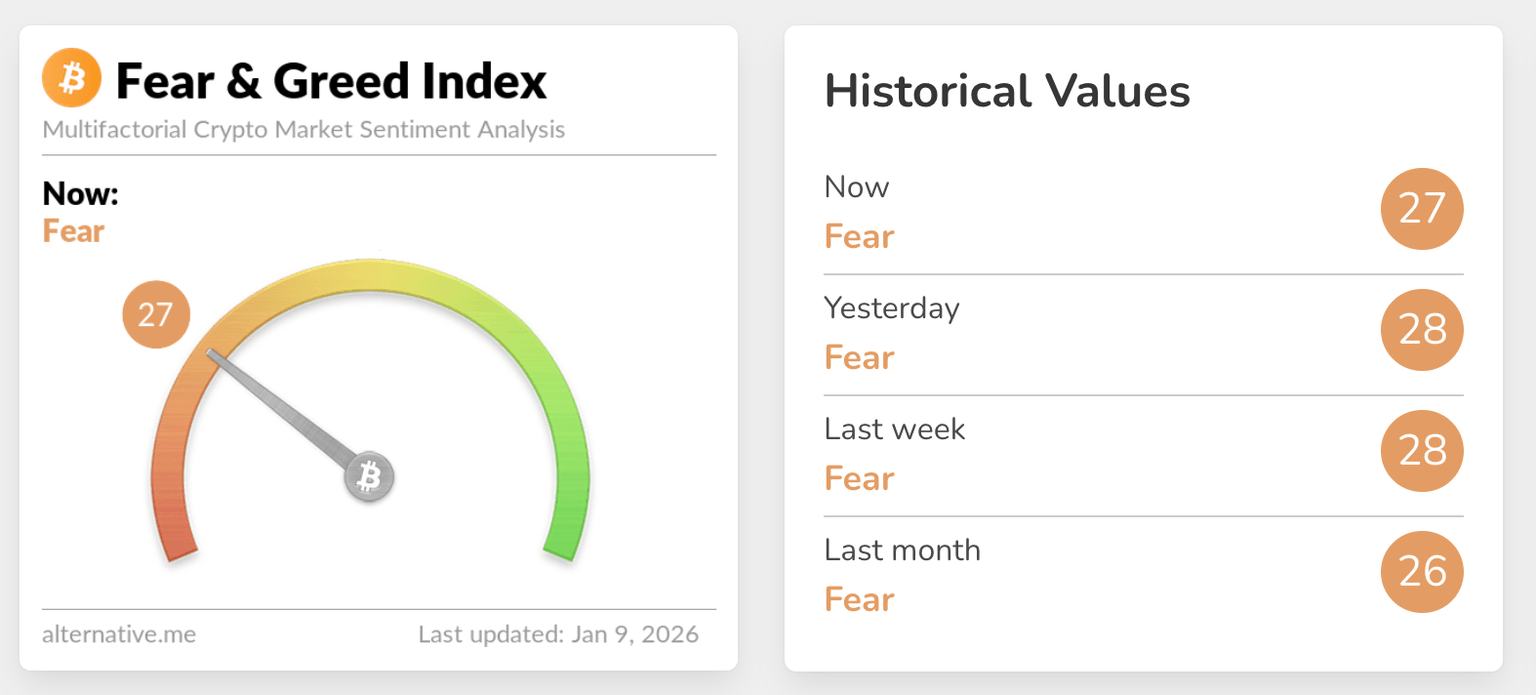
An expanded outlook of the crypto market suggests growing uncertainty, evidenced by a lack of investor confidence. The Crypto Fear & Greed Index is at 27 on Friday, confirming that investors remain worried.
Despite the index rising to 55 on Tuesday, the market failed to gain strength, leading to the ongoing correction. If sentiment fails to improve, XRP could extend the correction to $2.00 and possibly toward the December low at $1.77.
XRP struggles as retail demand remains weak
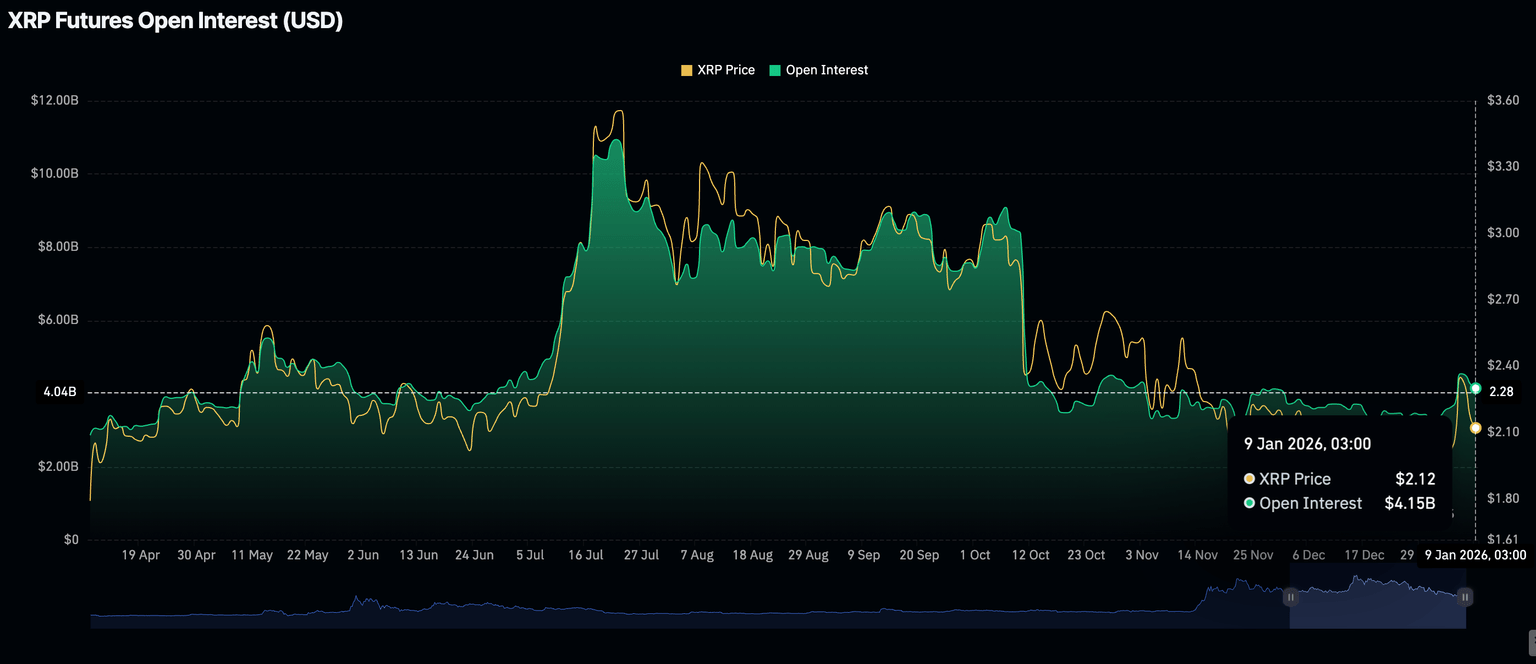
The XRP derivatives market is slowly shedding gains made since January 1, when the futures Open Interest (OI) expanded from $3.33 billion to $4.55 billion on Tuesday.
CoinGlass data shows the OI, representing the notional value of outstanding futures contracts, has declined to $4.15 billion on Friday, indicating that retail demand is softening. A steady decline in OI suggests that traders are losing confidence in XRP, which leaves prices vulnerable to selling pressure.
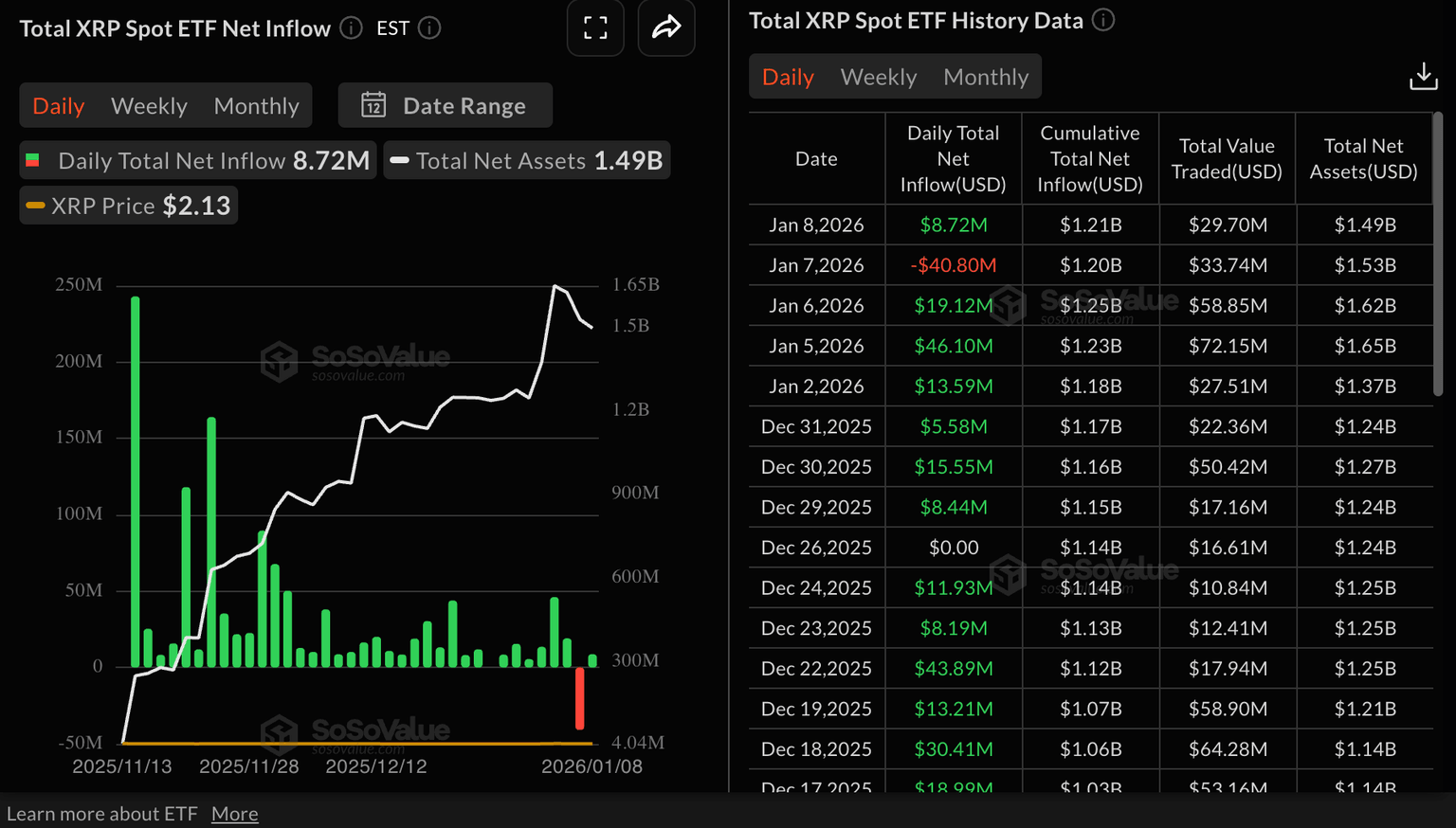
As retail demand gradually dwindles, institutional interest is back on track, as reflected by the XRP spot ETFs recording nearly $9 million in inflows on Thursday. SoSoValue data shows that the ETFs broke their record of steady inflows on Wednesday, with outflows totaling $41 million that day. The resurgence of inflows could be a signal that institutional interest in US-listed ETFs will continue.
XRP technical outlook: XRP holds key support as risk-off sentiment persists
XRP is trading at $2.10 at the time of writing on Friday as investors extend risk-aversion measures. The 100-day Exponential Moving Average (EMA) caps the upside at $2.22, while the 200-day EMA at $2.34 holds slightly below a descending trendline that has been hindering breakouts since the record high of $3.66 in July.
The Relative Strength Index (RSI) at 54 on the daily chart continues to extend its decline from overbought territory, indicating that bullish momentum is faltering.
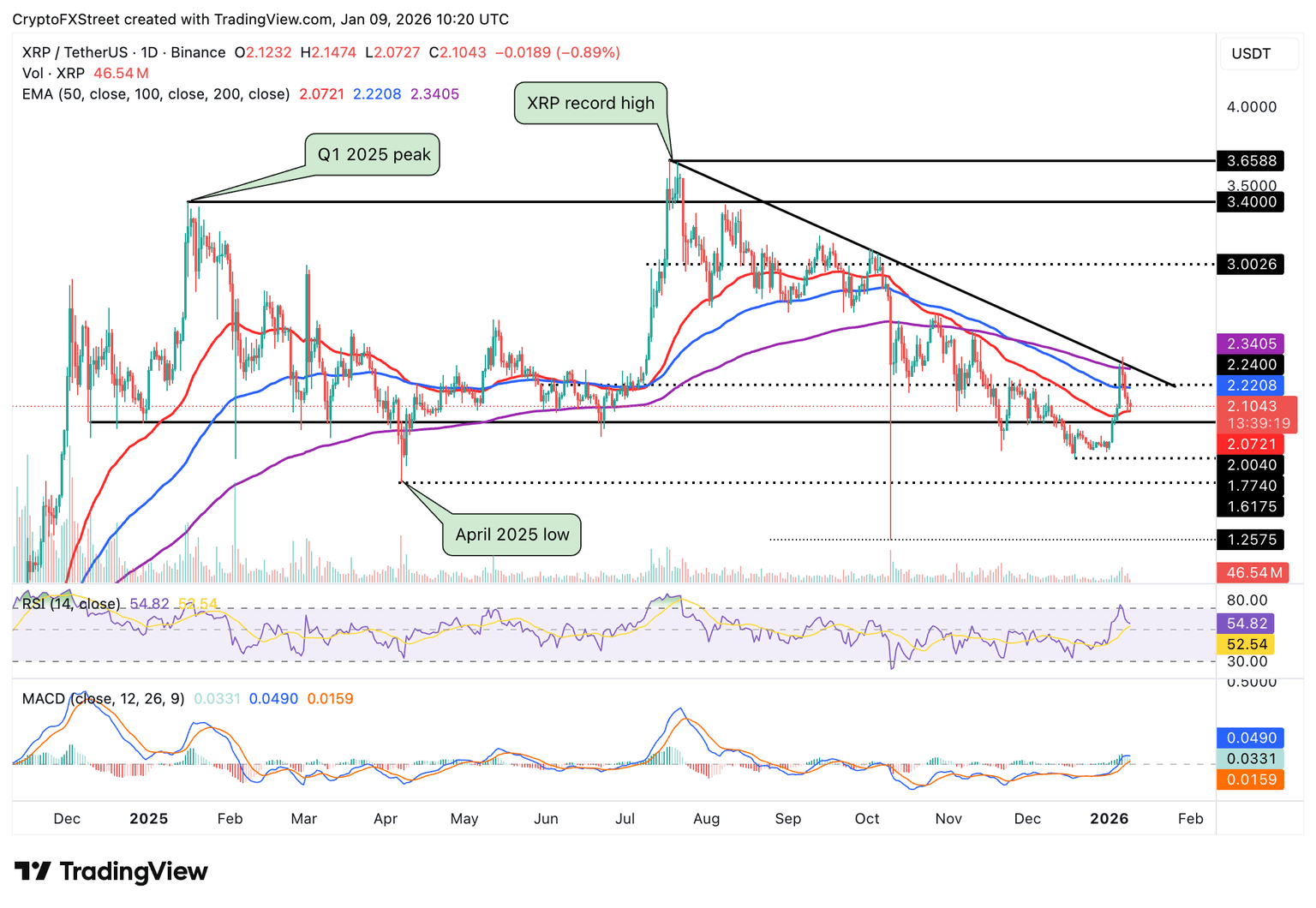
Conversely, traders may consider leaning into risk, given that the Moving Average Convergence Divergence (MACD) indicator has maintained a buy signal since January 1, which could prevent further declines below the 50-day EMA at $2.07.
A sustained breakout above the 100-day EMA and the 200-day EMA resistance cluster at $2.22-$2.34 could increase the odds of XRP rising beyond the descending trendline toward the $3.00 level.
Crypto ETF FAQs
An Exchange-Traded Fund (ETF) is an investment vehicle or an index that tracks the price of an underlying asset. ETFs can not only track a single asset, but a group of assets and sectors. For example, a Bitcoin ETF tracks Bitcoin’s price. ETF is a tool used by investors to gain exposure to a certain asset.
Yes. The first Bitcoin futures ETF in the US was approved by the US Securities & Exchange Commission in October 2021. A total of seven Bitcoin futures ETFs have been approved, with more than 20 still waiting for the regulator’s permission. The SEC says that the cryptocurrency industry is new and subject to manipulation, which is why it has been delaying crypto-related futures ETFs for the last few years.
Yes. The SEC approved in January 2024 the listing and trading of several Bitcoin spot Exchange-Traded Funds, opening the door to institutional capital and mainstream investors to trade the main crypto currency. The decision was hailed by the industry as a game changer.
The main advantage of crypto ETFs is the possibility of gaining exposure to a cryptocurrency without ownership, reducing the risk and cost of holding the asset. Other pros are a lower learning curve and higher security for investors since ETFs take charge of securing the underlying asset holdings. As for the main drawbacks, the main one is that as an investor you can’t have direct ownership of the asset, or, as they say in crypto, “not your keys, not your coins.” Other disadvantages are higher costs associated with holding crypto since ETFs charge fees for active management. Finally, even though investing in ETFs reduces the risk of holding an asset, price swings in the underlying cryptocurrency are likely to be reflected in the investment vehicle too.