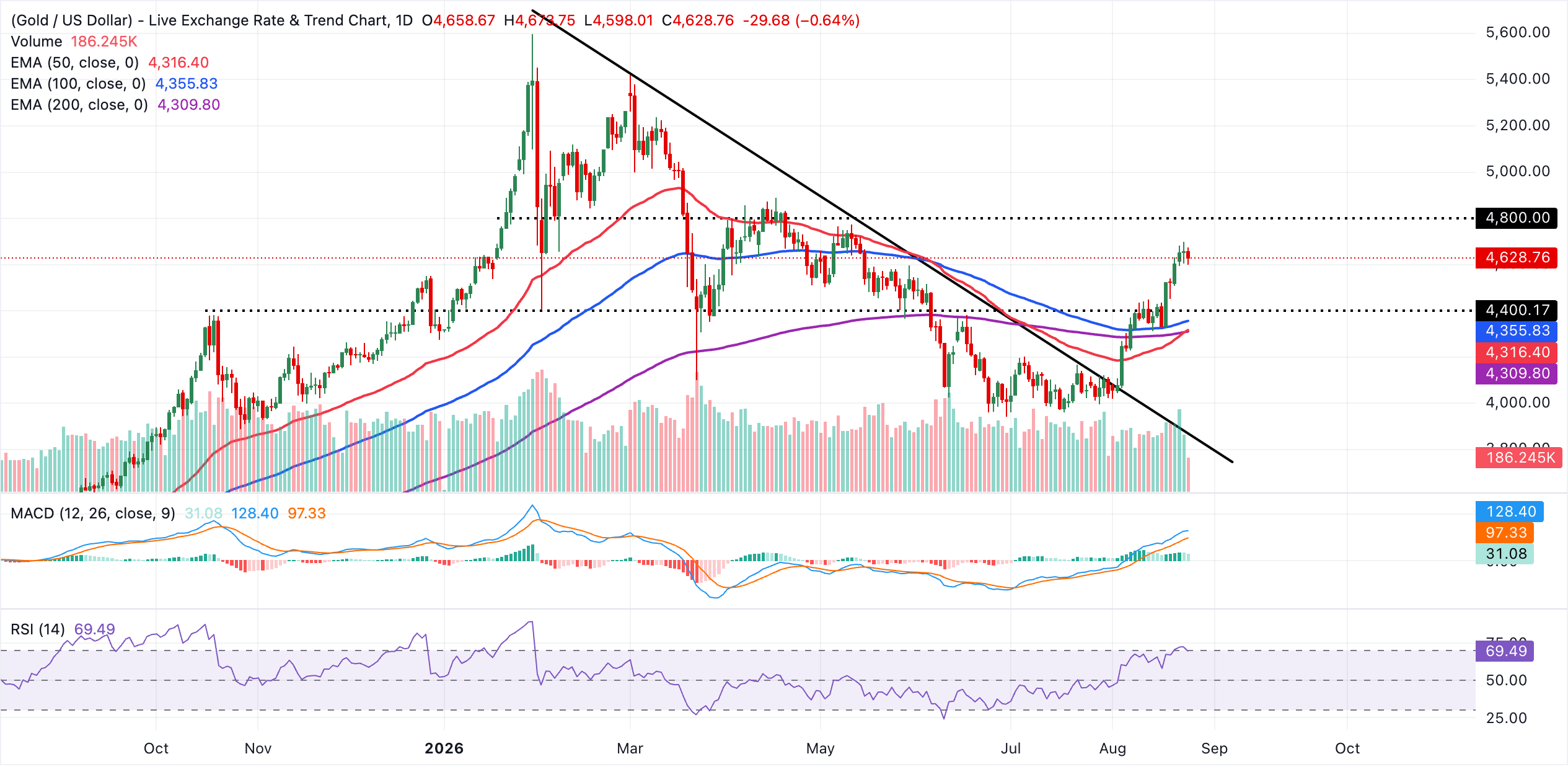
Gold (XAU/USD) builds on its intraday recovery from the lowest level since November 2025, touched below $3,950 earlier this Tuesday, and trades marginally higher on the day above $4,000. Any meaningful appreciation still seems elusive in the wake of a broadly firmer US Dollar. Against the backdrop of renewed Mideast tensions, mixed signals on US-Iran talks assist the USD and limit XAU/USD’s upside.
Germany Unemployment Rate s.a. meets expectations (6.3%) in May
Financial markets could find an important catalyst in the enchanting, fairytale-like landscape of Sintra this week. The ECB Forum will, as it does every year, gather the crème de la crème of central banks. The new boss at the Fed, who has clearly said that the Fed should stop explaining everything, will need to talk – and traders should listen.
New Zealand Dollar remains depressed as USD benefits from Iran risks and hawkish Fed

The NZD/USD pair attracts some sellers during the Asian session on Tuesday, though it lacks bearish conviction and remains confined in a familiar range held over the past week or so. Spot prices move little following the release of China’s official PMIs and currently trade just below mid-0.5600s, down 0.05% for the day.
An official survey published by the National Bureau of Statistics (NBS) showed that business activity in China’s manufacturing sector grew slightly above expectations in June. In fact, the official Manufacturing PMI rose from the 50.0 seen in May to 50.3, slightly above expectations of 50.1. Adding to this, the gauge for the non-manufacturing sector improved to 50.2 in June vs 50.1 in the previous month and forecast for a 49.9 print. The data, however, indicated that business activity barely remained in expansion territory on the back of sluggish domestic demand and weak consumer spending. This, in turn, fails to provide any impetus to antipodean currencies, including the New Zealand Dollar (NZD) and the NZD/USD pair.
The US Dollar (USD), on the other hand, draws some support from persistent geopolitical uncertainties and mixed signals on US-Iran talks. US President Donald Trump wrote on Truth Social that Iran had requested a meeting, and it will take place in Qatar’s capital, Doha, on Tuesday. However, Deputy Iranian Foreign Minister Kazem Gharibabadi denied that there were plans for technical talks this week. Furthermore, fresh Israeli strikes on Lebanon keep geopolitical risk premiums in play, which, along with hawkish US Federal Reserve (Fed) bets, underpins the safe-haven USD and weighs on the NZD/USD pair.
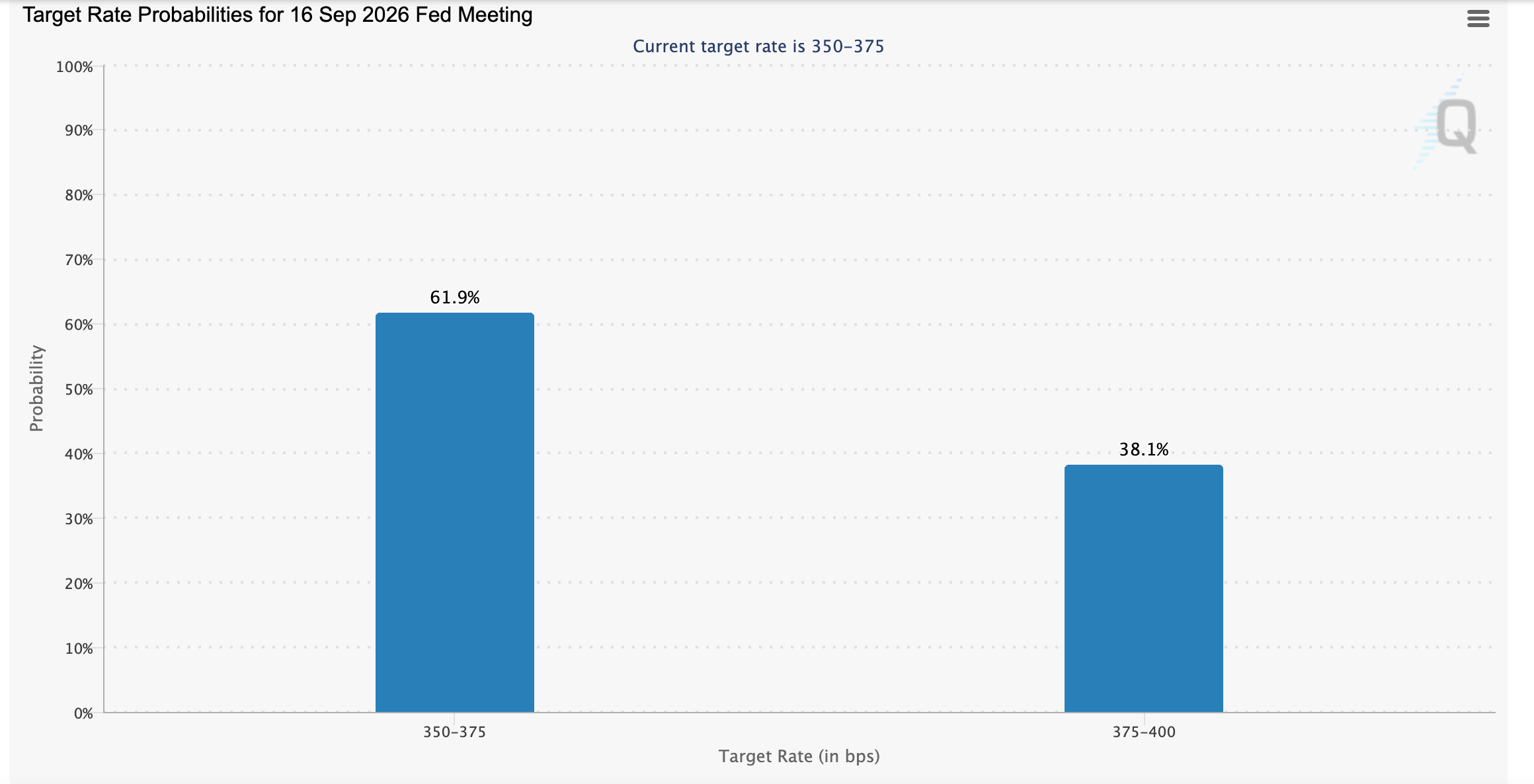
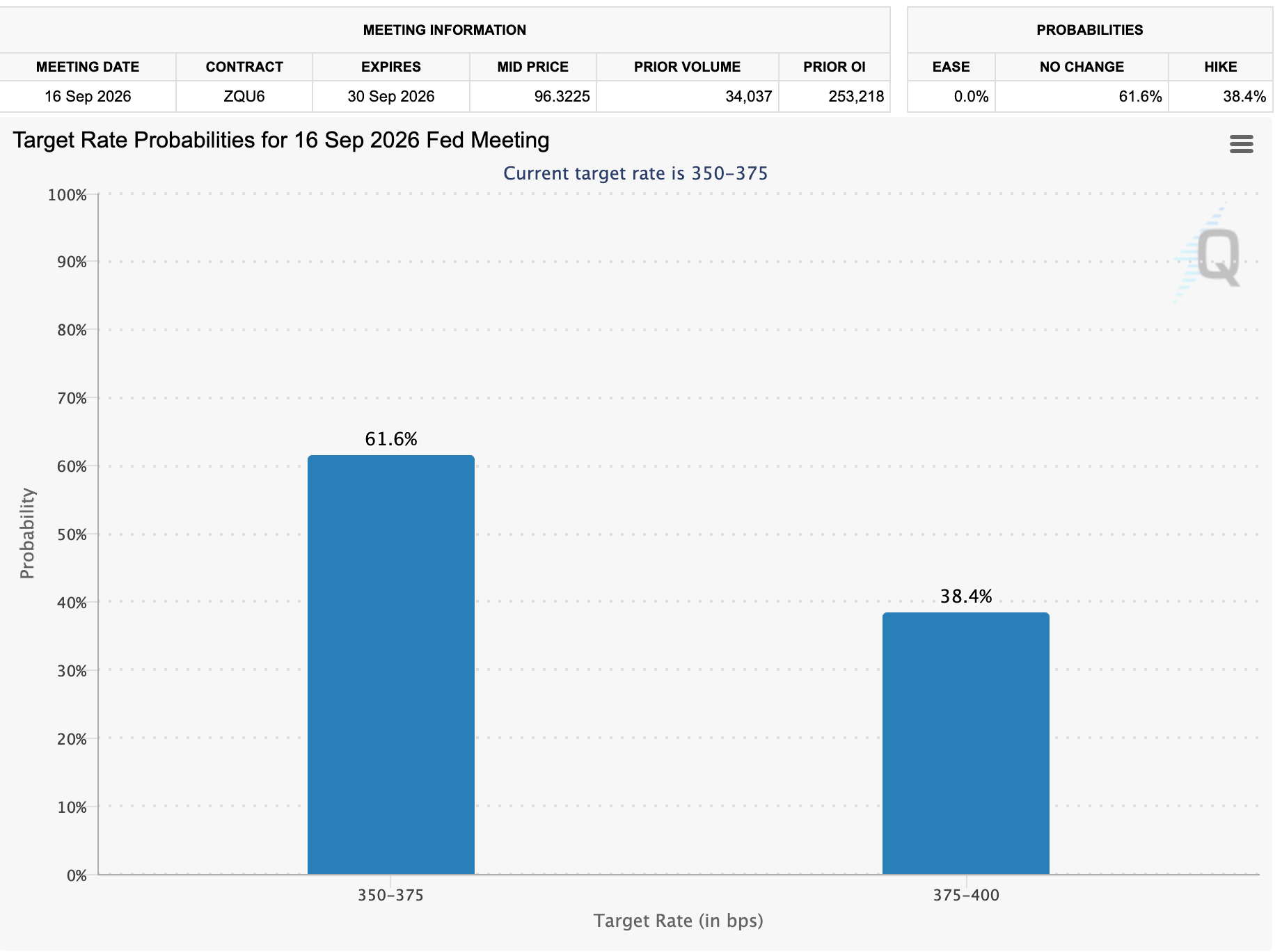
According to the CME Group’s FedWatch Tool, traders are still pricing in around 63% chance that the US central bank will raise borrowing costs in September and assigning over an 80% probability of a move by the end of this year. Adding to this, renewed US-Iran hostilities sparked inflationary fears, which, in turn, favor the USD bulls. However, the NZD/USD pair, so far, has held above its lowest level since November 2025, touched last week, warranting some caution before positioning for any further depreciating move.
New Zealand Dollar FAQs
The New Zealand Dollar (NZD), also known as the Kiwi, is a well-known traded currency among investors. Its value is broadly determined by the health of the New Zealand economy and the country’s central bank policy. Still, there are some unique particularities that also can make NZD move. The performance of the Chinese economy tends to move the Kiwi because China is New Zealand’s biggest trading partner. Bad news for the Chinese economy likely means less New Zealand exports to the country, hitting the economy and thus its currency. Another factor moving NZD is dairy prices as the dairy industry is New Zealand’s main export. High dairy prices boost export income, contributing positively to the economy and thus to the NZD.
The Reserve Bank of New Zealand (RBNZ) aims to achieve and maintain an inflation rate between 1% and 3% over the medium term, with a focus to keep it near the 2% mid-point. To this end, the bank sets an appropriate level of interest rates. When inflation is too high, the RBNZ will increase interest rates to cool the economy, but the move will also make bond yields higher, increasing investors’ appeal to invest in the country and thus boosting NZD. On the contrary, lower interest rates tend to weaken NZD. The so-called rate differential, or how rates in New Zealand are or are expected to be compared to the ones set by the US Federal Reserve, can also play a key role in moving the NZD/USD pair.
Macroeconomic data releases in New Zealand are key to assess the state of the economy and can impact the New Zealand Dollar’s (NZD) valuation. A strong economy, based on high economic growth, low unemployment and high confidence is good for NZD. High economic growth attracts foreign investment and may encourage the Reserve Bank of New Zealand to increase interest rates, if this economic strength comes together with elevated inflation. Conversely, if economic data is weak, NZD is likely to depreciate.
The New Zealand Dollar (NZD) tends to strengthen during risk-on periods, or when investors perceive that broader market risks are low and are optimistic about growth. This tends to lead to a more favorable outlook for commodities and so-called ‘commodity currencies’ such as the Kiwi. Conversely, NZD tends to weaken at times of market turbulence or economic uncertainty as investors tend to sell higher-risk assets and flee to the more-stable safe havens.
South Korea Service Sector Output increased to 1.3% in May from previous -1%
Financial markets could find an important catalyst in the enchanting, fairytale-like landscape of Sintra this week. The ECB Forum will, as it does every year, gather the crème de la crème of central banks. The new boss at the Fed, who has clearly said that the Fed should stop explaining everything, will need to talk – and traders should listen.
Singapore Dollar: Consolidates near recent lows against US Dollar – UOB

United Overseas Bank’s (UOB) Quek Ser Leang notes USD/SGD slipped to 1.2929 before recovering, with intraday price action still seen as range trading. For the day, the pair is expected to stay between 1.2930 and 1.2960. On a 1–3 week horizon, the bank keeps a constructive Dollar view while stressing that a break below 1.2925 would cap recent strength near 1.2991.
Range holds as upside momentum eases
“24-HOUR VIEW: When USD was at 1.2965 last Friday, we indicated that “the current price movements are likely part of a range-trading phase,” and we expected USD to “trade between 1.2950 and 1.2980.” We did not expect USD to dip to a low of 1.2929. USD recovered from the low to close -0.16% lower at 1.2949. Despite the decline, there is no clear increase in downward momentum, and USD is unlikely to weaken much further. Today, USD is more likely to trade between 1.2930 and 1.2960.”
“1-3 WEEKS VIEW: Tracking our positive view from the middle of the month, we highlighted the following last Friday (26 Jun, spot at 1.2965): “Upward momentum has eased somewhat, and USD needs to build on its gain soon, or a breach of 1.2925 (‘strong support’ level) would indicate that the 1.2991 high seen two days ago is the extent of the current USD strength.” USD subsequently dipped to a low of 1.2929. While upward momentum continues to ease, we will maintain our view as long as 1.2925 (no change in ‘strong support’ level) continues to hold”
(This article was created with the help of an Artificial Intelligence tool and reviewed by an editor.)
Canadian Dollar: Stabilizes against US Dollar as spreads narrow – Scotiabank

Scotiabank strategists Shaun Osborne and Eric Theoret note the Canadian Dollar (CAD) has gained modest relief as front-end US/Canada spreads retreat about 10bps from last week’s peak, though rate differentials remain punitive. They judge USD/CAD is trading close to their fundamental fair value at 1.4135 and stress that positioning indicators show an extremely overbought US Dollar (USD), implying limited upside and scope for a modest pullback.
Rally seen extremely stretched
“The CAD has found some relief in the past few sessions from the marginal retreat in front-end US/Canada spreads. The 2Y cash bond and swap spreads closed last week some 10bps off the intraday peak seen last Monday, a meaningful move after a sustained widening in rate differentials since the start of May.”
“Spreads remain punishing for the CAD, however, and the narrowing seen in the rate differentials so far can only so much to boost sentiment. The reality is that, given where spreads are still, the CAD is trading relatively close to our fundamental fair value estimate today (1.4135).”
“Neutral/bearish—Minor net gains for the CAD through late week trade support the idea of a stabilization at least in its recent decline but there is little evidence of technical strength in the CAD on the short-term charts.”
“What there is, however, is ample evidence of the extreme degree of stretch in the USD rally. The daily RSI peaked at near 89 last week, well into overbought territory. The oscillator has not been higher in at least 20 years.”
“Spot remains two standard deviations above its 40-day MA. Both indicators point to an extremely overbought USD. That may limit dollar gains to around 1.4250/1.43. A modest retracement could take spot to 1.4075/80.”
(This article was created with the help of an Artificial Intelligence tool and reviewed by an editor.)
Belgium Consumer Price Index (YoY) down to 3.4% in June from previous 4.08%
Gold price remains in the negative territory around $4,050 in Monday’s European trading. The bullion struggles as military clashes between the United States and Iran in the strategic Strait of Hormuz have revived inflation concerns, bolstering Fed rate hike expectations. However, a broad US Dollar retreat is helping limit Gold’s downside.
Euro steadies below 1.1400, Lagarde speech in spotlight

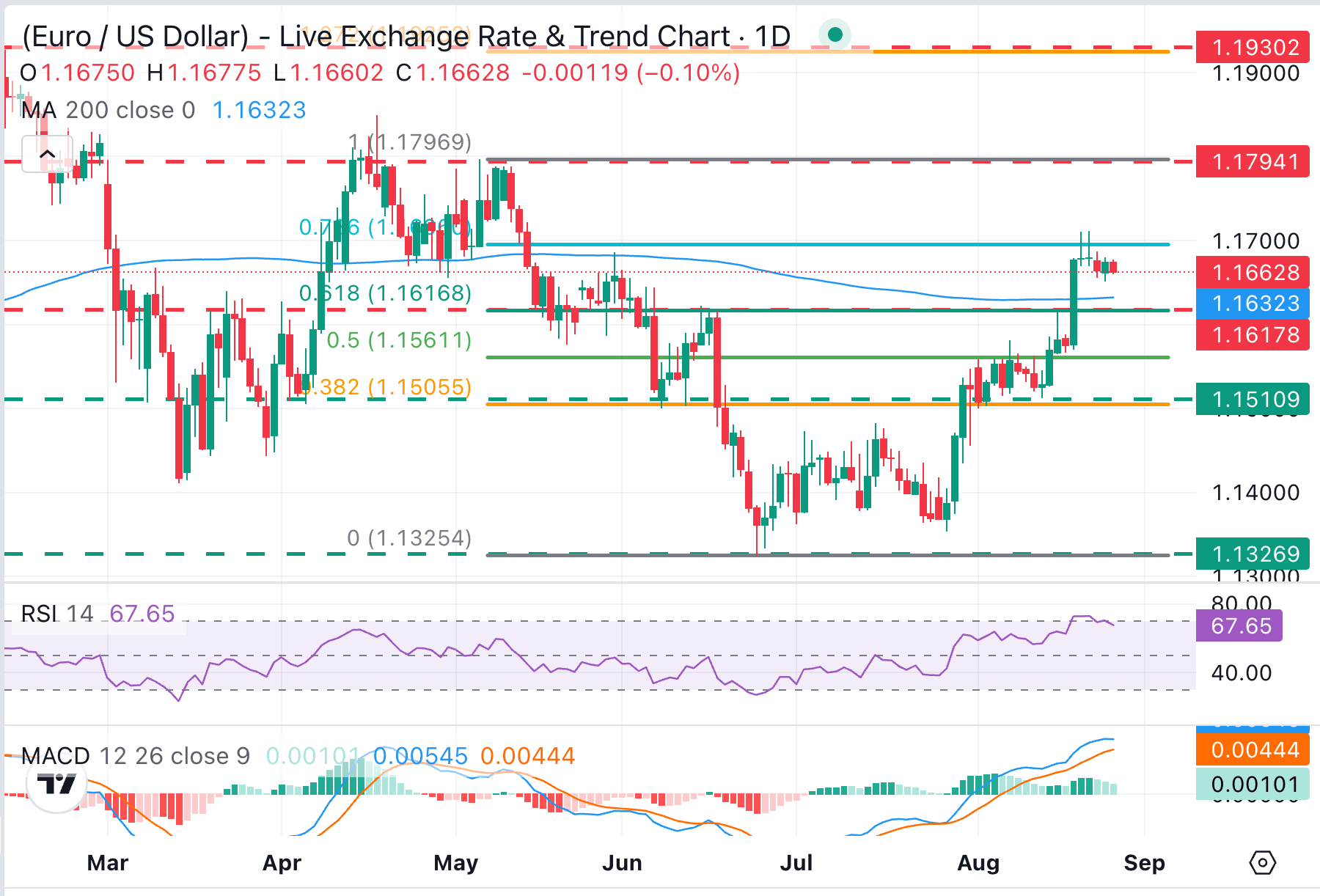
The EUR/USD pair holds steady near 1.1385 during the early European trading hours on Monday. Traders continue to assess the developments surrounding talks to end the US war with Iran. The European Central Bank’s (ECB) annual forum and the US June employment data will be the highlights later this week.
CNN reported on Monday that a US official said that the US and Iran will stand down for now after both sides traded fire near the Strait of Hormuz. Two countries plan to meet on Tuesday in Doha, Qatar.
Iran’s Foreign Minister Abbas Araghchi stated that responsibility for the Strait of Hormuz lies solely with Tehran and warned that any attempt to bypass its preferred route in the waterway will cause “tension and escalation.”
The Middle East tensions have continued to stoke inflation pressures, while a surprisingly hawkish debut from Kevin Warsh as a new Federal Reserve (Fed) chair earlier in the month has reversed market expectations for US rate cuts this year. This, in turn, could underpin the US Dollar (USD) against the Euro (EUR) in the near term.
ECB President Christine Lagarde will open the forum on Monday. Her speech could offer some hints about evolving central bank policies amid lower oil prices and stock market volatility. Any hawkish remarks from policymakers could provide some support to the shared currency.
Euro FAQs
The Euro is the currency for the 20 European Union countries that belong to the Eurozone. It is the second most heavily traded currency in the world behind the US Dollar. In 2022, it accounted for 31% of all foreign exchange transactions, with an average daily turnover of over $2.2 trillion a day.
EUR/USD is the most heavily traded currency pair in the world, accounting for an estimated 30% off all transactions, followed by EUR/JPY (4%), EUR/GBP (3%) and EUR/AUD (2%).
The European Central Bank (ECB) in Frankfurt, Germany, is the reserve bank for the Eurozone. The ECB sets interest rates and manages monetary policy.
The ECB’s primary mandate is to maintain price stability, which means either controlling inflation or stimulating growth. Its primary tool is the raising or lowering of interest rates. Relatively high interest rates – or the expectation of higher rates – will usually benefit the Euro and vice versa.
The ECB Governing Council makes monetary policy decisions at meetings held eight times a year. Decisions are made by heads of the Eurozone national banks and six permanent members, including the President of the ECB, Christine Lagarde.
Eurozone inflation data, measured by the Harmonized Index of Consumer Prices (HICP), is an important econometric for the Euro. If inflation rises more than expected, especially if above the ECB’s 2% target, it obliges the ECB to raise interest rates to bring it back under control.
Relatively high interest rates compared to its counterparts will usually benefit the Euro, as it makes the region more attractive as a place for global investors to park their money.
Data releases gauge the health of the economy and can impact on the Euro. Indicators such as GDP, Manufacturing and Services PMIs, employment, and consumer sentiment surveys can all influence the direction of the single currency.
A strong economy is good for the Euro. Not only does it attract more foreign investment but it may encourage the ECB to put up interest rates, which will directly strengthen the Euro. Otherwise, if economic data is weak, the Euro is likely to fall.
Economic data for the four largest economies in the euro area (Germany, France, Italy and Spain) are especially significant, as they account for 75% of the Eurozone’s economy.
Another significant data release for the Euro is the Trade Balance. This indicator measures the difference between what a country earns from its exports and what it spends on imports over a given period.
If a country produces highly sought after exports then its currency will gain in value purely from the extra demand created from foreign buyers seeking to purchase these goods. Therefore, a positive net Trade Balance strengthens a currency and vice versa for a negative balance.
UK’s Burnham to unveil plan to shift power from London

The former Greater Manchester mayor and the Labour lawmaker, Andy Burnham, will outline his vision for the United Kingdom (UK) on Monday, the Guardian reported.
Last Monday, Keir Starmer faced political pressure and announced he would step down as leader of the ruling Labour Party. The schedule to pick a successor could see Burnham installed as Prime Minister as soon as July 17, if no other challenger emerges.
Burnham will set out on Monday how he’d “lift Britain back up” by devolving UK power from London to regions. His key pledges include “good growth in every postcode”, creation of a “No. 10 North,” and reform of public procurement to maximize support for British jobs and industry.
Market reaction
At press time, the GBP/USD pair trades 0.01% higher at around 1.3198.
Pound Sterling FAQs
The Pound Sterling (GBP) is the oldest currency in the world (886 AD) and the official currency of the United Kingdom. It is the fourth most traded unit for foreign exchange (FX) in the world, accounting for 12% of all transactions, averaging $630 billion a day, according to 2022 data.
Its key trading pairs are GBP/USD, also known as ‘Cable’, which accounts for 11% of FX, GBP/JPY, or the ‘Dragon’ as it is known by traders (3%), and EUR/GBP (2%). The Pound Sterling is issued by the Bank of England (BoE).
The single most important factor influencing the value of the Pound Sterling is monetary policy decided by the Bank of England. The BoE bases its decisions on whether it has achieved its primary goal of “price stability” – a steady inflation rate of around 2%. Its primary tool for achieving this is the adjustment of interest rates.
When inflation is too high, the BoE will try to rein it in by raising interest rates, making it more expensive for people and businesses to access credit. This is generally positive for GBP, as higher interest rates make the UK a more attractive place for global investors to park their money.
When inflation falls too low it is a sign economic growth is slowing. In this scenario, the BoE will consider lowering interest rates to cheapen credit so businesses will borrow more to invest in growth-generating projects.
Data releases gauge the health of the economy and can impact the value of the Pound Sterling. Indicators such as GDP, Manufacturing and Services PMIs, and employment can all influence the direction of the GBP.
A strong economy is good for Sterling. Not only does it attract more foreign investment but it may encourage the BoE to put up interest rates, which will directly strengthen GBP. Otherwise, if economic data is weak, the Pound Sterling is likely to fall.
Another significant data release for the Pound Sterling is the Trade Balance. This indicator measures the difference between what a country earns from its exports and what it spends on imports over a given period.
If a country produces highly sought-after exports, its currency will benefit purely from the extra demand created from foreign buyers seeking to purchase these goods. Therefore, a positive net Trade Balance strengthens a currency and vice versa for a negative balance.
Vietnam: Strong growth but rising inflation risks – HSBC

HSBC portrays Vietnam as one of Asia’s fastest-growing economies, supported by booming electronics exports and import-intensive manufacturing. However, a widening trade deficit and elevated Oil prices are eroding the current account surplus and pushing inflation above the State Bank of Vietnam’s ceiling. The bank trims its external surplus forecast and raises its 2026 inflation projection.
Fast expansion with external and price pressures
“Despite moderating from last year’s 8%, the country saw rather decent growth of 7.8% y-o-y in 1Q26. This easily made Vietnam sustain its position asone of Asia’s fast-growing economies.”
“Nevertheless, a detailed look at trade data shows Vietnam’s trade resilience. Exports jumped almost 20% y-o-y YTD on average, thanks to booming electronics shipments.”
“Despite booming exports, Vietnam’s imports grew even more, rising 30% y-o-y YTD. This is also understandable, to an extent, as Vietnam’s manufacturing sector is rather import-intensive.”
“Since December 2025, Vietnam has consistently run a trade deficit, which widened to a record level of USD5.2bn in May. We do not think Vietnam will enter a “twin deficit” situation, as the tourism receipts and secondary income will help.”
“Fast forward to today, Vietnam’s inflation rose sharply to 5.6% in May, breaching the State Bank of Vietnam (SBV)’s 4.5% inflation ceiling for the third month running. While the significant jump in petrol prices was the main culprit, it is important not to ignore the recent hike in food prices.”
(This article was created with the help of an Artificial Intelligence tool and reviewed by an editor.)