Statistics Canada handed the headline writers a gift and the analysts a headache. Real GDP shrank 0.1% on an annualized basis in the first quarter, and with the fourth quarter of 2025 revised down to a 1.0% contraction, that is two negative quarters in a row, the textbook definition of a technical recession and Canada’s first since the pandemic.
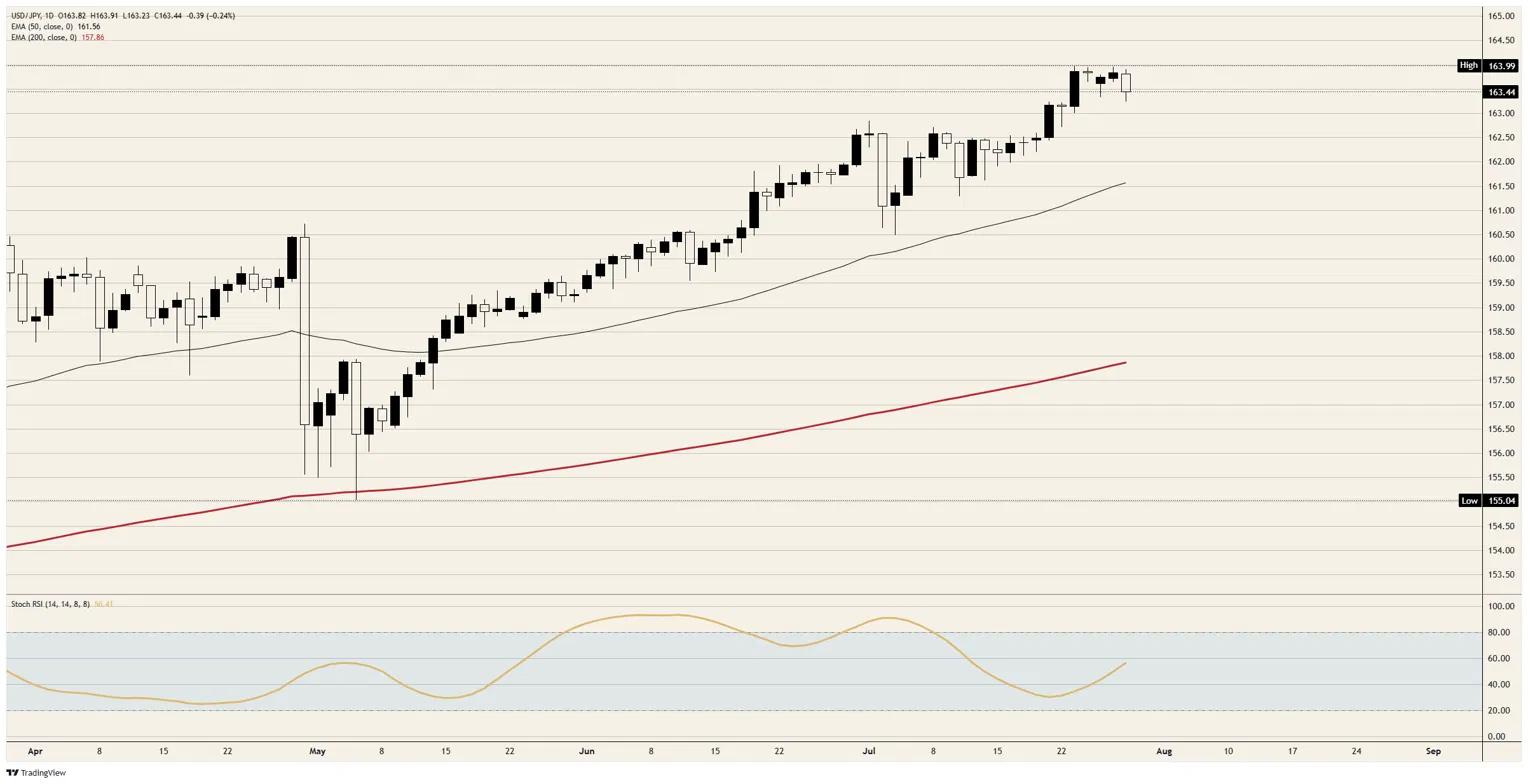
160 is back: Japan faces another Yen intervention dilemma
Welcome to Japan’s Groundhog Day: the Japanese Yen continues to severely underperform against major global currencies and remains close (again) to the 160.00 threshold against the US Dollar. Support from the Bank of Japan in the form of an interest rate hike on June 16 would certainly ease the pain, but it is unclear whether Japanese authorities can wait until then.
Recent interventions have provided short-term respite but failed to turn the tide, as they don’t address the root cause of the Yen’s weakness. Moreover, geopolitics and central bank policy factors put the Yen in danger of weakening further. Will Japan fire its Yen bazooka again?

The pressure on the JPY intensifies
The JPY has come under fierce selling pressure in the wake of economic concerns stemming from the Iran war. Japan imports over 90% of its crude Oil from the Middle East, leaving it highly vulnerable to supply chain disruptions caused by the closure of the Strait of Hormuz.
In fact, Japan relies on the strategic waterway for over 90% of its Crude Oil imports and a vast majority of the Liquefied Natural Gas (LNG). Bottlenecks impact Japanese factories directly, inflating raw material costs, exacerbating inflation, and squeezing consumer purchasing power.
A widening rate gap contributes to the JPY fall
This puts the BoJ in a severe policy dilemma: raising interest rates amid the threat of inflation could dent a fragile economy, while holding rates down risks further currency depreciation.
In April, a rare vote split at the April BoJ meeting reflected growing pressure to increase interest rates in the near term. April’s discussions over the possibility of a hike, combined with the continued Yen weakness, make economists believe that the BoJ will indeed proceed to increase borrowing costs at its next meeting on June 16.
Still, it is unclear whether a hike will solve the Yen’s problems.
This is because the BoJ is still lagging other major central banks, which raised rates aggressively to combat inflation post-pandemic. This resulted in a massive interest rate gap that further contributed to the Yen’s weakness.

Government interventions fail to reverse the bearish trend
To prop up the embattled currency, Japanese authorities have spent a record ¥11.73 trillion ($74+ billion) in intervention between late April and early May.
The move, however, delivered only temporary relief for the Yen, as the aforementioned fundamental drivers continue to push the currency lower. Furthermore, Japan’s financial resources are finite, suggesting that the real pivot relies on the BoJ. Until then, the effect of any government intervention, even a potential joint action with the US, is unlikely to reverse the broader JPY bearish trend.
The Yen remains trapped between two forces Japan cannot easily control: high global energy prices and a wide interest-rate gap with other major central banks, particularly the Fed.
Another intervention in the Forex market could slow the move toward 160.00, but unless the BoJ delivers a stronger policy signal, any relief may prove short-lived. That leaves traders facing a familiar question: will Japan defend the line again?
Indian Rupee flattens while recovery in oil prices dampens outlook
The Indian Rupee (INR) trades almost flat against the US Dollar (USD) in the opening session on Tuesday. The USD/INR pair flattens around 95.00, while the Indian Rupee’s outlook has become uncertain as oil prices have bounced back due to fresh concerns over the United States (US)-Iran deal.
As of writing, the WTI Oil price trades 1.25% lower to near $90, but recovered strongly by over 4.5% on Monday. Theoretically, currencies from economies, such as India, which rely heavily on oil imports to meet their energy needs, tend to underperform when oil prices recover.
US-Iran negotiations toward a deal have been halted
Iran’s Tasnim News agency reported on Monday that members of the negotiating team of Tehran have stopped message exchanges with the US through mediators in protest against attacks on Lebanon.
Iran’s Parliament Speaker Mohammad Bagher Ghalibaf also said a post on X that the US naval blockade and war crimes in Lebanon are clear evidence of US noncompliance with the ceasefire. Separately, Iranian Foreign Minister Seyed Abbas Araghchi warned the US and Iran of serious consequences if there were military actions on all fronts, including Lebanon.
Meanwhile, US President Donald Trump has calmed market nerves by expressing confidence, in an interview with ABC News, that an agreement with Iran to extend the ceasefire and reopen the Strait of Hormuz over the next week, adding he had quickly resolved a diplomatic “glitch” that threatened to derail progress.
After threats of consequences to the US and Iran, President Donald Trump stated in a post on Truth Social that the exchange of attacks between Israel and Lebanon has been stopped.
Investors keenly await RBI’s policy
This week, the Reserve Bank of India’s monetary policy announcement on Friday will be the key trigger for the Indian currency. The RBI is almost certain to hold the Repo Rate steady at 5.25% and guide a hawkish stance on the monetary policy outlook, as elevated energy prices have prompted inflationary pressures. Investors will also focus on commentary from RBI Governor Sanjay Malhotra regarding the economic outlook in the wake of the Middle East crisis.
FIIs turned out net sellers on first day of June
Foreign Institutional Investors (FIIs) remained net sellers on the first day of June, offloading their stake worth Rs. 3,911.68 crore in the Indian stock market. Overseas investors have been paring their stake for a long time. Meanwhile, the Middle East tensions-driven energy supply shock has raised concerns over India Inc.’s projected earnings.
US JOLTS Job Openings data in spotlight
In Tuesday’s session, investors will focus on the US JOLTS Job Openings data for April, which will be published at 14:00 GMT. The JOLTS Job Openings data will provide cues regarding the job demand, information that influences the Federal Reserve’s (Fed) monetary policy expectations.
The data is expected to show that US employers posted 6.82 million fresh jobs, close to the March reading of 6.866 million.
Technical Analysis: USD/INR struggles to return above 20-day EMA

USD/INR trades almost flat at around 95.00, keeping a mildly bearish near-term tone as it holds just under the 20-day Exponential Moving Average (EMA) at 95.38. The pair has slipped back from recent highs, and the inability to reclaim the short-term EMA suggests upside attempts are being capped, while the Relative Strength Index (14) near 49.5 hints at fading momentum and a more balanced, consolidative backdrop rather than strong directional pressure.
On the topside, immediate resistance is located at the 20-day EMA around 95.39, and a daily close above this barrier would be needed to ease the current downside bias and reopen the path toward the May 28 high at 95.67. Looking down, the pair could decline towards 94.00 if it drops below the May 29 low at 94.46.
(The technical analysis of this story was written with the help of an AI tool.)
Silver FAQs
Silver is a precious metal highly traded among investors. It has been historically used as a store of value and a medium of exchange. Although less popular than Gold, traders may turn to Silver to diversify their investment portfolio, for its intrinsic value or as a potential hedge during high-inflation periods. Investors can buy physical Silver, in coins or in bars, or trade it through vehicles such as Exchange Traded Funds, which track its price on international markets.
Silver prices can move due to a wide range of factors. Geopolitical instability or fears of a deep recession can make Silver price escalate due to its safe-haven status, although to a lesser extent than Gold’s. As a yieldless asset, Silver tends to rise with lower interest rates. Its moves also depend on how the US Dollar (USD) behaves as the asset is priced in dollars (XAG/USD). A strong Dollar tends to keep the price of Silver at bay, whereas a weaker Dollar is likely to propel prices up. Other factors such as investment demand, mining supply – Silver is much more abundant than Gold – and recycling rates can also affect prices.
Silver is widely used in industry, particularly in sectors such as electronics or solar energy, as it has one of the highest electric conductivity of all metals – more than Copper and Gold. A surge in demand can increase prices, while a decline tends to lower them. Dynamics in the US, Chinese and Indian economies can also contribute to price swings: for the US and particularly China, their big industrial sectors use Silver in various processes; in India, consumers’ demand for the precious metal for jewellery also plays a key role in setting prices.
Silver prices tend to follow Gold’s moves. When Gold prices rise, Silver typically follows suit, as their status as safe-haven assets is similar. The Gold/Silver ratio, which shows the number of ounces of Silver needed to equal the value of one ounce of Gold, may help to determine the relative valuation between both metals. Some investors may consider a high ratio as an indicator that Silver is undervalued, or Gold is overvalued. On the contrary, a low ratio might suggest that Gold is undervalued relative to Silver.
Euro posts modest gains above 1.1600, Middle East tensions curb upside

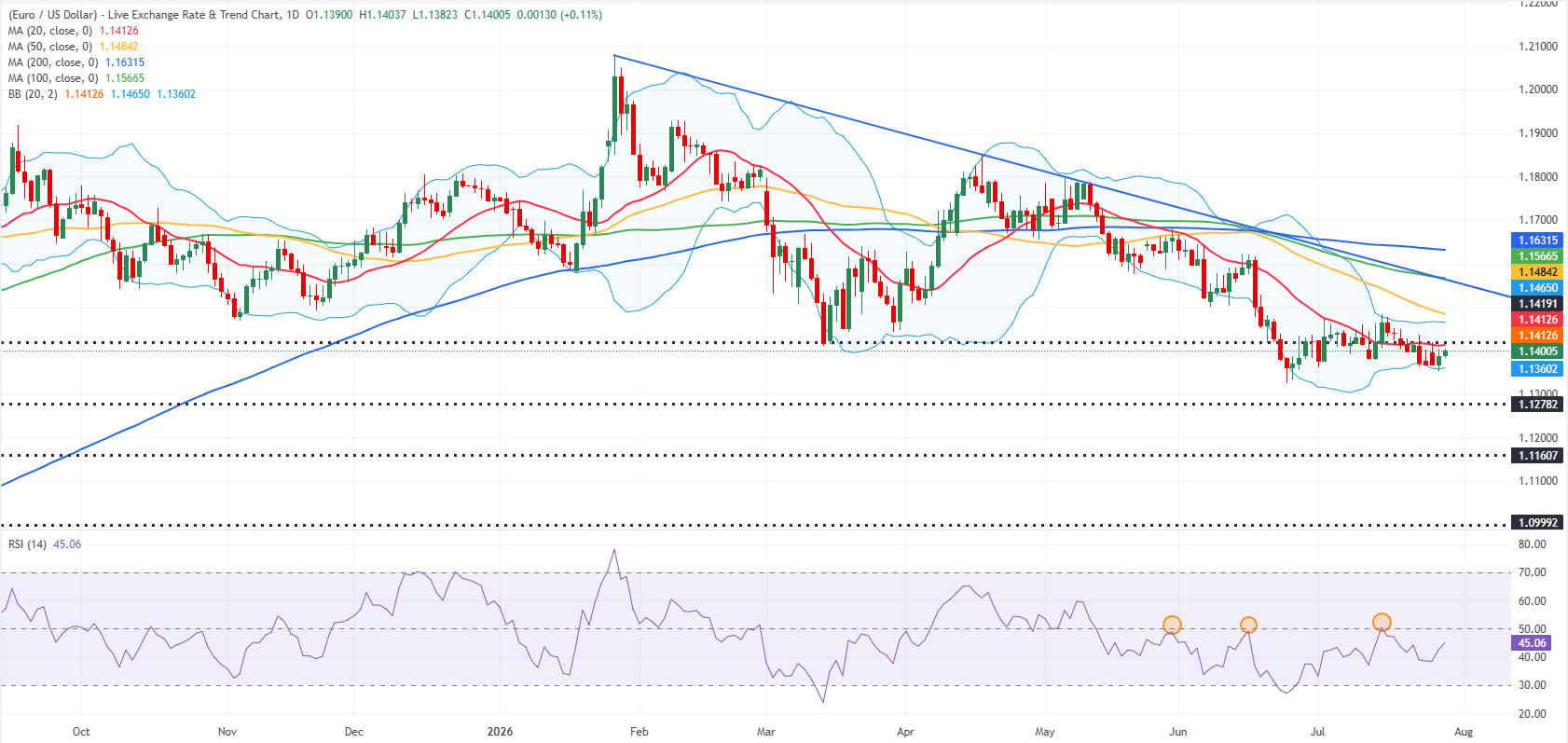
The EUR/USD pair posts modest gains around 1.1635 during the early Asian session on Tuesday. Nonetheless, the potential upside might be limited, as Iran announced a halt to US negotiations and a full closure of the Strait of Hormuz, which could prompt risk-off sentiment. The preliminary reading of the Harmonized Index of Consumer Prices (HICP) from the Eurozone will be released later on Tuesday.
Iranian negotiators will stop exchanging messages with the United States (US) through intermediaries, and Iran will move to fully close the Strait of Hormuz, in retaliation for ongoing ceasefire violations, per CNBC. US President Donald Trump said on Monday that he called Israeli Prime Minister Benjamin Netanyahu and asked him not to proceed with a major raid on Beirut, and that Israeli troops were turned around.
However, Netanyahu contradicts Trump, emphasizing that he will continue operating against Hezbollah in Southern Lebanon. Escalating Middle East conflicts could boost a safe-haven currency such as the US dollar (USD) and act as a headwind for the major pair.
Across the pond, the hawkish stance of the European Central Bank (ECB) could provide some support to the shared currency. ECB executive board member Isabel Schnabel said on Monday that the central bank can no longer overlook the inflationary impact of the conflict in Iran, as price pressures have spread beyond the energy sector and the risk of unanchored inflation expectations has risen.
Euro FAQs
The Euro is the currency for the 20 European Union countries that belong to the Eurozone. It is the second most heavily traded currency in the world behind the US Dollar. In 2022, it accounted for 31% of all foreign exchange transactions, with an average daily turnover of over $2.2 trillion a day.
EUR/USD is the most heavily traded currency pair in the world, accounting for an estimated 30% off all transactions, followed by EUR/JPY (4%), EUR/GBP (3%) and EUR/AUD (2%).
The European Central Bank (ECB) in Frankfurt, Germany, is the reserve bank for the Eurozone. The ECB sets interest rates and manages monetary policy.
The ECB’s primary mandate is to maintain price stability, which means either controlling inflation or stimulating growth. Its primary tool is the raising or lowering of interest rates. Relatively high interest rates – or the expectation of higher rates – will usually benefit the Euro and vice versa.
The ECB Governing Council makes monetary policy decisions at meetings held eight times a year. Decisions are made by heads of the Eurozone national banks and six permanent members, including the President of the ECB, Christine Lagarde.
Eurozone inflation data, measured by the Harmonized Index of Consumer Prices (HICP), is an important econometric for the Euro. If inflation rises more than expected, especially if above the ECB’s 2% target, it obliges the ECB to raise interest rates to bring it back under control.
Relatively high interest rates compared to its counterparts will usually benefit the Euro, as it makes the region more attractive as a place for global investors to park their money.
Data releases gauge the health of the economy and can impact on the Euro. Indicators such as GDP, Manufacturing and Services PMIs, employment, and consumer sentiment surveys can all influence the direction of the single currency.
A strong economy is good for the Euro. Not only does it attract more foreign investment but it may encourage the ECB to put up interest rates, which will directly strengthen the Euro. Otherwise, if economic data is weak, the Euro is likely to fall.
Economic data for the four largest economies in the euro area (Germany, France, Italy and Spain) are especially significant, as they account for 75% of the Eurozone’s economy.
Another significant data release for the Euro is the Trade Balance. This indicator measures the difference between what a country earns from its exports and what it spends on imports over a given period.
If a country produces highly sought after exports then its currency will gain in value purely from the extra demand created from foreign buyers seeking to purchase these goods. Therefore, a positive net Trade Balance strengthens a currency and vice versa for a negative balance.
Carry trade: Selective opportunities as theory collides with practice – Commerzbank

Commerzbank’s Thu Lan Nguyen discusses the renewed popularity of FX carry trades as hopes grow for an end to the Middle East war. She stresses that long-run returns are not driven by interest differentials alone and warns that theory argues against persistent excess returns. Recent gains in G10 and EM carry baskets mask divergent outcomes between JPY and CHF funding strategies.
Carry appeal versus long term limits
“While an agreement between the US and Iran is still pending, investors are becoming increasingly bold on the back of hopes for an imminent end to the war in the Middle East. In the FX market, this can be seen in the fact that a comeback of so-called carry trades is already being proclaimed.”
“Strategy is not primarily based on the interest rate differential, but on the expectation that the higher-yielding currency will appreciate against the lower-yielding currency. Why? Because exchange rates are generally far more volatile than interest rates, meaning that any exchange-rate movement will significantly outweigh the interest income.”
“And indeed, this strategy has recently proven to be highly profitable. A strategy that, for example, goes long the three highest-yielding G10 currencies against the three lowest-yielding G10 currencies has delivered clearly positive returns since April of last year. An even better performance was achieved by a strategy that invested in selected emerging-market currencies.”
“Of course, theory does not always match practice. The recent winning streak does not have to end overnight just because theory says so. In the 2000s there was even a very long period during which carry trades were extremely profitable.”
“This shows that it pays to look at fundamental arguments for an appreciation or depreciation and not to blindly chase a trend.”
(This article was created with the help of an Artificial Intelligence tool and reviewed by an editor.)
Euro: ECB seen acting as inflation risks rise – MUFG

Halpenny highlights that the ECB is widely expected to hike at its 11 June meeting, with markets focused on forward guidance for the Euro. He notes Isabel Schnabel’s warning that the ECB can no longer look through the energy shock and that rising de-anchoring risks, alongside firmer Euro-zone CPI, argue for action that is already largely priced in.
ECB hike priced, guidance in focus
“Nine G10 central banks will meet this month with only the RBNZ not meeting and we will likely see some of those central banks act despite the ongoing uncertainty related to the conflict in the Middle East. The OIS market indicates that there are two central banks that are most likely to act – the ECB and the BoJ.”
“Executive Board member at the ECB, Isabel Schnabel, stated in South Korea today that the ECB can “no longer look through this shock” and that the “risk of de-anchoring inflation expectations is rising”. Her comments echoed comments from President Lagarde last week, also in Asia, who spoke of the importance of “credibility” and that credibility is “earned through action”.”
“There is very little doubt now that the ECB will act at the meeting on 11th June. The inflation data last week points to a pick-up in the euro-zone annual CPI data to be released tomorrow, from 3.0% to 3.2% – also the MUFG estimate (here). The decision is close to priced so the key for the euro will be forward guidance on the potential for a further hike.”
(This article was created with the help of an Artificial Intelligence tool and reviewed by an editor.)
Gold Price Forecast: XAU/USD dives to $4,500 amid simmering tensions in Iran
Gold (XAU/USD) trades lower on Monday, reverting Friday’s gains and returning to the $4,500 atrea following rejection at the $4,590 resistance area. Precious metals remain weighed, as tensions between Iran and the US escalate and Israel ramps up operations in Lebanon, and with a data-busy week ahead in the US.
speaker
The US and Iran exchanged attacks earlier on Monday, and Israel extended its occupation in Lebanon, adding strain to a frail ceasefire in the region. US President Donald Trump is still due to sign the memorandum of understanding that would extend the truce, while in Iran, the speaker of the parliament vowed retaliation to “clear evidence of US non-compliance with the ceasefire.”
On the data front, the US ISM Manufacturing Purchasing Manager’s Index (PMI) report, due later on Monday, is expected to show a healthy business activity, likely to support the Greenback. Investors, however, will wait for a string of labour data, with particular interest on Friday’s Nonfarm Payrolls for further insight into the Federal Reserve’s (Fed) monetary policy plans.
Technical Analysis: Gold remains vulnerable below $4,600

XAU/USD trades at $4,500, after yet another rejection at the $4,590 area on Friday. Momentum indicators in the 4-hour chart hint at fading bullish pressure, with the Relative Strength Index (RSI) hovering near 50 and the Moving Average Convergence Divergence (MACD) indicator flattening near the zero level
Bears are set to test Friday’s low in the $4,490 area, which is likely to provide some support. Further down, the May 28 low, near $4,365, will come into focus. On the upside, bulls need to break the mentioned $4,590 resistance area (May 19, 25, 26, and 29 highs) to shift the focus towards mid-May lows at the $4,645 area and the top of the bearish channel, at $4,670.
(The technical analysis of this story was written with the help of an AI tool.)
Gold FAQs
Gold has played a key role in human’s history as it has been widely used as a store of value and medium of exchange. Currently, apart from its shine and usage for jewelry, the precious metal is widely seen as a safe-haven asset, meaning that it is considered a good investment during turbulent times. Gold is also widely seen as a hedge against inflation and against depreciating currencies as it doesn’t rely on any specific issuer or government.
Central banks are the biggest Gold holders. In their aim to support their currencies in turbulent times, central banks tend to diversify their reserves and buy Gold to improve the perceived strength of the economy and the currency. High Gold reserves can be a source of trust for a country’s solvency. Central banks added 1,136 tonnes of Gold worth around $70 billion to their reserves in 2022, according to data from the World Gold Council. This is the highest yearly purchase since records began. Central banks from emerging economies such as China, India and Turkey are quickly increasing their Gold reserves.
Gold has an inverse correlation with the US Dollar and US Treasuries, which are both major reserve and safe-haven assets. When the Dollar depreciates, Gold tends to rise, enabling investors and central banks to diversify their assets in turbulent times. Gold is also inversely correlated with risk assets. A rally in the stock market tends to weaken Gold price, while sell-offs in riskier markets tend to favor the precious metal.
The price can move due to a wide range of factors. Geopolitical instability or fears of a deep recession can quickly make Gold price escalate due to its safe-haven status. As a yield-less asset, Gold tends to rise with lower interest rates, while higher cost of money usually weighs down on the yellow metal. Still, most moves depend on how the US Dollar (USD) behaves as the asset is priced in dollars (XAU/USD). A strong Dollar tends to keep the price of Gold controlled, whereas a weaker Dollar is likely to push Gold prices up.
Sweden Manufacturing PMI increased to 57.3 in May from previous 57.2
Gold edges lower during the Asian session on Monday and moves further away from a two-week high, around the $4,600 neighborhood, touched on Friday. The US Dollar regains positive traction at the start of the new week amid persistent geopolitical uncertainties and hawkish US Federal Reserve (Fed) expectations, which, in turn, is seen acting as a headwind for the commodity.
51.8: China’s RatingDog Manufacturing PMI beats estimates in May

China’s RatingDog Manufacturing Purchasing Managers’ Index (PMI) declines to 51.8 in May from 52.2 in April the latest data published by RatingDog showed on Monday.
The market forecast was for a 51.4 reading.
AUD/USD reaction to China’s PMI data
At the time of writing, the AUD/USD pair is trading around 0.7183, up 0.01% on the day.
(This story was corrected on June 1 at 01:50 GMT to say China’s RatingDog Manufacturing Purchasing Managers’ Index (PMI) declined to 51.8 in May from 52.2 in April, not rose).
Australian Dollar FAQs
One of the most significant factors for the Australian Dollar (AUD) is the level of interest rates set by the Reserve Bank of Australia (RBA). Because Australia is a resource-rich country another key driver is the price of its biggest export, Iron Ore. The health of the Chinese economy, its largest trading partner, is a factor, as well as inflation in Australia, its growth rate and Trade Balance. Market sentiment – whether investors are taking on more risky assets (risk-on) or seeking safe-havens (risk-off) – is also a factor, with risk-on positive for AUD.
The Reserve Bank of Australia (RBA) influences the Australian Dollar (AUD) by setting the level of interest rates that Australian banks can lend to each other. This influences the level of interest rates in the economy as a whole. The main goal of the RBA is to maintain a stable inflation rate of 2-3% by adjusting interest rates up or down. Relatively high interest rates compared to other major central banks support the AUD, and the opposite for relatively low. The RBA can also use quantitative easing and tightening to influence credit conditions, with the former AUD-negative and the latter AUD-positive.
China is Australia’s largest trading partner so the health of the Chinese economy is a major influence on the value of the Australian Dollar (AUD). When the Chinese economy is doing well it purchases more raw materials, goods and services from Australia, lifting demand for the AUD, and pushing up its value. The opposite is the case when the Chinese economy is not growing as fast as expected. Positive or negative surprises in Chinese growth data, therefore, often have a direct impact on the Australian Dollar and its pairs.
Iron Ore is Australia’s largest export, accounting for $118 billion a year according to data from 2021, with China as its primary destination. The price of Iron Ore, therefore, can be a driver of the Australian Dollar. Generally, if the price of Iron Ore rises, AUD also goes up, as aggregate demand for the currency increases. The opposite is the case if the price of Iron Ore falls. Higher Iron Ore prices also tend to result in a greater likelihood of a positive Trade Balance for Australia, which is also positive of the AUD.
The Trade Balance, which is the difference between what a country earns from its exports versus what it pays for its imports, is another factor that can influence the value of the Australian Dollar. If Australia produces highly sought after exports, then its currency will gain in value purely from the surplus demand created from foreign buyers seeking to purchase its exports versus what it spends to purchase imports. Therefore, a positive net Trade Balance strengthens the AUD, with the opposite effect if the Trade Balance is negative.
China NBS Manufacturing PMI meets forecasts (50) in May
Mainstream adoption of Dogecoin could increase its real utility for everyday spending, according to Timothy Stebbing, director of the Dogecoin Foundation. Crypto projects need to deliver value to the next generation, aged around 15 or older, who will experience mainstream crypto.